If you want to know in detail about Android Versions Names A to Z, then you stay with us.
In today’s article, we will tell you about all Android Version List A to Z.
Before knowing the Android Version Names, we get to know in detail about Android and its history.
Android is a very popular and used operating system in almost every Smartphone, which is owned by Google.
Linux, which is an operating system running on a computer, Android is its Upgraded Version, which after making many modifications, has been made to run on the phone by putting it according to the phone.
The funny thing is that Google did not make Android, but rather Android Inc. in July 2005. The company was acquired for about $ 50 million. Android was created by Andy Rubin, Rich Miner, and Nick Sears.
First, on 23 September 2008, Google launched the first Android version of the smartphone. So far Google has launched 15 versions of Android and will continue to do so.
For every version of Android, Google launches by making some improvements to the old version and adding new features, and the top Android App Development Companies are adopting these features to provide the best apps to their clients.
Every year many manufacturers sell millions of Android devices to people all over the world, whether it is a phone or a tablet.
Android handles 88% of the world’s Smartphone Market.
Right now there are several users of Android billions all over the world, which is a statement of Android’s fame.
We hope you know by now what Android is. So let us now tell you about the Android Version Name List.
List of Android Versions Names A to Z
Table of Contents
Thanks to its Android version list names A to Z based on delicious desserts, a trip to Android history is refreshing. What’s more, with every release of its new version, Google puts up a giant statue of the delicacy associated with the code name on its campus.
What better way to celebrate the arrival of those luring versions of Android with images, equally tempting as the desserts they stand for?
Every Android version after 1.5 has evolved with definite code names that have been chosen alphabetically. No official explanation has ever been given for this peculiar naming convention, although it has garnered much media attention.
However, Google did not attach any high-calorie code name to its initial versions 1.0 and 1.1 of the Android Operating System.
We all know that the latest features, improvements, and new controls of different latest Android versions list names with logo 2024.
The latest Android version list 2024 is Android 11. We have given below the latest Android version names with details so read it & if you want you can share it with people who are in this business.
Android Versions Names A to Z
1. Android Cupcake

Although not the very first version from Google after buying the company Android, Version 1.5 is considered the first prominent version that highlights the true power of its platform.
With this version, in fact, Google kicked off the trend of naming its versions after yummy desserts. The many novel features associated with the Cupcake version include a third-party keyboard and direct upload to YouTube.
2. Android Donut
Released in 2009, Android Version 1.6 has been codenamed as “Donut,” after the tasty ring-shaped delicacy. Its specialties like enhanced user experience, text-to-speech support, improved video aspects, and refined search integration helped Google to get itself rooted firmly in the highly competitive Smartphone market.
Larger screen-size support and turn-by-turn navigation facilities were the other sweet coatings on the donut version.
3. Android Eclair
Named after those oblong baked pastries with chocolate filling, Android 2.0 was released in October 2009. The bug fix version named as 2.0.1 soon followed a couple of months later in December 2009. Then in January 2010, out came Android 2.1 with added animation features.
However, the three versions are often considered as a single release. Google map navigation is its highlighted feature. Other celebrated features of Version Éclair include flash and digital zoom options for the camera, live wallpapers, a multi-touch support mechanism, and of course, Bluetooth 2.1 support.
4. Android Froyo
The next one in the queue, Android 2.2 is about sheer speed and nothing else. Short for Frozen Yoghurt, Google got this version’s speed technically enhanced. Yet another unique characteristic feature was its uniquely redesigned home screen. It ensured better functionality for the device, with the entire process streamlined.
5. Android Gingerbread

Named after the popular ginger-flavoured cookies, Android version 2.3 looked new and fresh in various ways. A few of its unique features included several cameras, SIP internet calling, a download manager, and a few sensors like a barometer, gravimeter, etc.
6. Honeycomb

Google introduced Android 3.0 in February 2011 and called it, Honeycomb. Made for tablets, versions 3.1 and 3.2 followed in rapid succession. Gingerbread was, in fact, Android’s very first tablet-only update.
7. Android Ice Cream Sandwich

Version 4.0 was the outcome of Google’s plan to get the tablet-only platform of Honeycomb synthesized with a mobile platform. Dubbed an Ice-cream Sandwich, enhanced functionality was not the only big change that it brought in. In terms of design too, there were drastic changes.
The introduction of default font was another highlight of Ice-cream Sandwich. From this version onwards, Google effectively brought all its services under the umbrella, ‘Of Google Play’.
8. Android Jelly Bean
Although primarily meant to enhance functionality and improve user interface, “Google Now” was indeed the most innovative aspect of Version 4.1. Nicknamed Jelly Bean, here was something that could correctly guess what you are up to searching before you actually go looking for it.
Apart from the predictive feature, highly interactive notifications also made Jelly Bean stand out from the rest. Version 4.1 was also noted for its unique in-built speech-to-text engine, popularly referred to as ‘voice typing’. The outcome has been an overall performance enhancement that assured an absolutely buttery smooth user interface.
9. Android KitKat
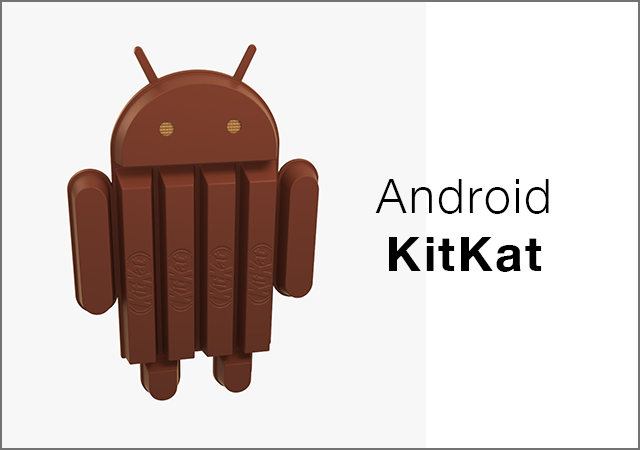
Google officially unveiled Android version 4.4, which it named as Kitkat, in 2013. Nestle offered full support and even kicked off a special ad campaign on its release.
However, the code name that Google had initially associated with Android 4.4 was “Key Lime Pie”. The name was later changed to Kitkat as they thought the key lime pie was not a very popular dessert.
Google wanted a dessert name that is known by all and hence partnered with Nestle for the code name KitKat. Version 4.4 debuted on Nexus 5, and can effectively run on quite many devices compared to earlier Android versions.
The ‘Google Now’ feature, introduced initially in Jelly Bean was taken even further with the introduction of KitKat.
Earlier, you had to touch the gadget to open up the smart artificial intelligence (AI) assistant. Now with Jelly Bean, all you have to do to initiate the search is to utter the required phrase to the gadget.
Another advantage of Version 4.4 was that the operating system could run even on devices with lower RAM. 512 MB RAM was the recommended minimum. The introduction of Emoji on Google’s keyboards was yet another unique aspect of Kitkat.
10. Android Lollipop

With Version 5.0, popularly referred to as Lollipop, Android could simply spread across a wide range of devices from smartphones to televisions and even to smartwatches. Lollipop came out with a brand new runtime. Battery saving feature ensures excellent battery life on these various devices. It saves your phone from damage even while its battery is running low.
11. Android Marshmallow

Android 6.0, named Marshmallow, has been released under the code name Android M. It has ushered in a fistful of welcome changes that are sure to make a major impact. Doze mode that cuts down the power consumption drastically when the device is idle, opt-in app permission, fully supported USB C, and inbuilt fingerprint sensor support system is but a few of them.
12. Android Nougat

Android “Nougat” was officially released on August 22, 2016. Google Nexus was the first smartphone which receive an update of this version. This version provided two major features to the smartphone, Split Screen and DOZE power saving mechanism and faster application installation. Now people can use multiple applications at once. This was a great achievement. Now smartphone users have the ability to multi-task. This version gave users the ability to reply inline to notifications.
DOZE power saving mechanism helps the system to extend battery life. This version was revolutionary.
13. Android Oreo

Android Oreo was released to the public on August 21, 2017. It comes with more features like picture-in-picture, password autofill, notification dots, smart text selection, and snooze notifications. Android Nougat introduces the split screen concept. With Oreo, we get a native picture-in-picture feature. When you’re watching a video in an app like Netflix or VLC, just hit the Home button and the video will shrink to a little floating window. You can then open any other app—catch up on email or even play games while watching the video. Now, if you choose to, you can let Google automatically fill in login details for apps you’re using. The notification dots feature will put a little dot in the bottom-right corner of the app when you have any unread notifications.
14. Android Pie
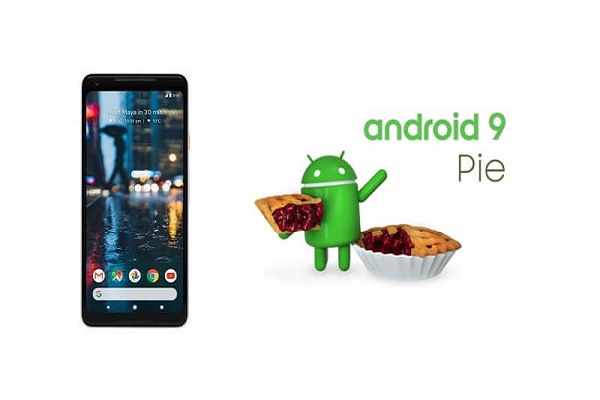
On August 6, 2018, Google officially announced the final release of Android 9 under the title “Pie”, with the update initially available for current Google Pixel devices. Google has made a lot of improvements in this version in terms of design and security. It uses the Material Design 2.0 concept, Smartphones can be used in a flexible way.
It even allows the user to get a MicroSD card formatted and use it as internal storage, enjoying the same security level.
Of course, all those versions that have been rolled out by Google till now have been sweet. Still, sweeter ones are yet to come and steal the show.
15. Android 10.0
 Every time Google comes up with the latest Android version in September 2019 Android Version 10 has been released.
This Android version is currently available on all-new devices and it’s slowly making its way to existing phones in the world.
This Android latest version software brings about a reimagined interface for the Android gestures, this time doing away with the tapeable Back button and relying on the completely swipe-driven approach to the system navigation.
16. Android 11
 Android’s latest version in 2020 Android 11.0 is in progress. The latest update that has already made history by the developer previews its platform that can never be seen.
Google announced the first Android 11 preview this 19 February 2020. We can catch most of the tech community with it nearly a month before it arrives in the market.
The first Android 11 preview is a preview though it’s rough around the edges that does not mean it is available for general use in the market. It is almost certainly not the complete picture of when the final software will be available due to COVID-19.
17. Android 12
The most recent version of Google’s Android operating system is called Android 12. It was introduced in September 2021 and gives the Android platform a number of new features and enhancements.
The new “Material You” design language, which enables users to personalize the appearance and feel of their smartphone with a broad selection of color palettes and styles, is one of the standout aspects of Android 12. The user may choose whatever color they like for the backdrop of their home screen, lock screen, and other aspects of the system using a brand-new color picker included in this.
The updated privacy dashboard is yet another noteworthy feature of Android 12. Users can better monitor and manage the data that applications are accessing on their smartphones because of this clear and understandable overview that it provides. It also has additional restrictions for private rights that may be provided just once, such as location and camera access.
A new “Material Motion” animation foundation, which enables smoother and more responsive animations, as well as a new “Adaptive Battery” feature, which optimizes battery use by learning the user’s habits and patterns, are also included in Android 12.
A number of additional security and privacy improvements are also included in Android 12, including support for the WPA3 Wi-Fi standard and better data encryption.
Overall, Android 12 is a sizable upgrade that adds a lot of fresh features and enhancements to the Android platform. Anyone with a compatible device should certainly check it out.